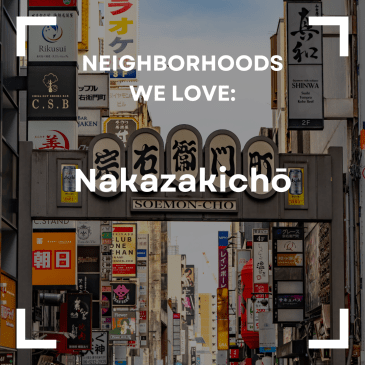
Okay, confession. Most of my time in Osaka was spent exactly where you’d expect, Dotonbori, Kuromon Market, Shinsekai, eating my way through the city like everyone else does and honestly loving every second of it. But my favorite few hours in Osaka happened somewhere almost nobody puts on their itinerary, a tiny neighborhood a few minutes north of Umeda called Nakazakichō.
I’d stumbled onto it through a random blog post about bohemian Osaka right before my trip, and I’m so glad I did, because this is the kind of neighborhood you actually have to know about ahead of time. It’s not on the main tourist track, it doesn’t have a famous landmark, and it’s easy to walk right past if you don’t know what you’re looking for. Which is exactly why it’s worth writing an entire piece about.
Why Nakazakichō Exists the Way It Does
Here’s the thing that makes this neighborhood special. Nakazakichō is one of the few areas in central Osaka that survived World War II bombing largely intact, which means it still has the narrow lanes and old wooden houses that most of the rest of the city lost and rebuilt decades ago. For a long time it was just a quiet, slightly forgotten residential pocket sitting in the shadow of Umeda’s skyscrapers.
Then, starting in the early 2000s, artists and small business owners started moving in and converting those old folk houses into cafes, galleries, and studios instead of tearing them down. What you get now is this genuinely rare combination, real untouched old Osaka architecture filled with an indie, artsy, slightly bohemian energy. It’s the kind of neighborhood that other cities spend a lot of money trying to manufacture, and Osaka just sort of has it, quietly, a few minutes off the beaten path.
What It’s Actually Like to Walk Around
Small. That’s the first thing. Nakazakichō is not a sprawling district, it’s a web of narrow residential streets that you could technically walk through in fifteen minutes if you had somewhere to be. But you shouldn’t have somewhere to be, that’s the whole point. This is a wander with no plan neighborhood, where half the fun is just noticing what’s tucked behind an unassuming door.
A few spots worth actually seeking out:
- La Granda Familio Nakazakicho, a good anchor point to start your wander from
- Arabiq, a small cafe with real character, easy to duck into for a coffee break mid walk
- Picco Latte, another cafe stop, this neighborhood genuinely runs on small independent coffee shops rather than chains, which is a big part of the appeal
And then there’s the one spot I actually want to spend real time on.
Salon de AManTo: The Heart of the Neighborhood
If you only stop at one place in Nakazakichō, make it this one. Salon de AManTo opened in 2001 and was actually the first cafe in the entire area to be set up inside a renovated old folk house, meaning it’s not just a spot in the neighborhood, it’s kind of the reason the neighborhood became what it is.
It was founded by a guy named Jun Amanto, who is an artist, dancer, and actor from Osaka, and the space is run by a rotating cast of about thirty artists from totally different fields, all taking turns hosting things there. Depending on when you show up you might catch a talk, a workshop, someone’s art on display, or just a quiet afternoon with a coffee and no event at all. It’s not a polished, Instagram optimized cafe experience, it’s a genuinely community run creative space that happens to also serve you a drink, and honestly that’s rarer than it should be.
Tenjinbashi-suji Shopping Street
Right on the edge of Nakazakichō is one of Osaka’s most underrated stretches, Tenjinbashi-suji Shopping Street, which claims the title of the longest covered shopping arcade in all of Japan. It runs for a genuinely long time, and walking its full length from one end to the north end is a good way to bookend your visit to the neighborhood, old school shops, local restaurants, and none of the tourist markup you’ll find in Dotonbori.
I’d recommend treating this as your transition point, wander Nakazakichō’s quiet backstreets first, then walk the arcade as your way back toward the busier parts of the city, letting the energy build back up gradually instead of jumping straight from silence into Shinsaibashi chaos.
Why It’s Worth Your Time
Look, I get it, when you’ve got four nights in Osaka and a list of famous food streets and a theme park calling your name, a quiet neighborhood of cafes doesn’t necessarily sound like the priority. But here’s my honest pitch for carving out even just a half morning for Nakazakichō.
Osaka’s big draws are all about volume and energy, crowds, neon, food stalls shouting for your attention. That’s genuinely great and you should absolutely do it. But Nakazakichō is the exact opposite of that, and having both in the same trip makes each one hit harder. You walk through Dotonbori and it’s electric because it’s supposed to be. You walk through Nakazakichō and it’s quiet because that’s the whole point, and after a few days of Osaka’s intensity, quiet starts to feel like a genuine gift.
It’s also just a good reminder of something I keep relearning every time I travel, the neighborhoods that never make the top ten lists are usually the ones locals actually love, and they stay that way specifically because most visitors never bother to look them up. You now know to look this one up.
How to Actually Get There and What to Pair It With
Nakazakichō sits just north of Umeda, an easy walk or a short ride from central Osaka, which makes it simple to slot into a morning before you head into the busier parts of the city for the afternoon. I’d pair it with a broader Osaka day rather than treating it as a standalone destination, wander Nakazakichō’s backstreets and grab a coffee at Arabiq or Picco Latte, spend some real time at Salon de AManTo if something’s happening there, then walk the length of Tenjinbashi-suji Shopping Street as you make your way toward wherever your afternoon plans actually are.
Give it two, maybe three unhurried hours. That’s all it needs, and honestly that’s all it wants from you. Some neighborhoods are built for checklists. This one’s built for wandering, and it’s a genuinely great reminder that Osaka has more than one gear.

